
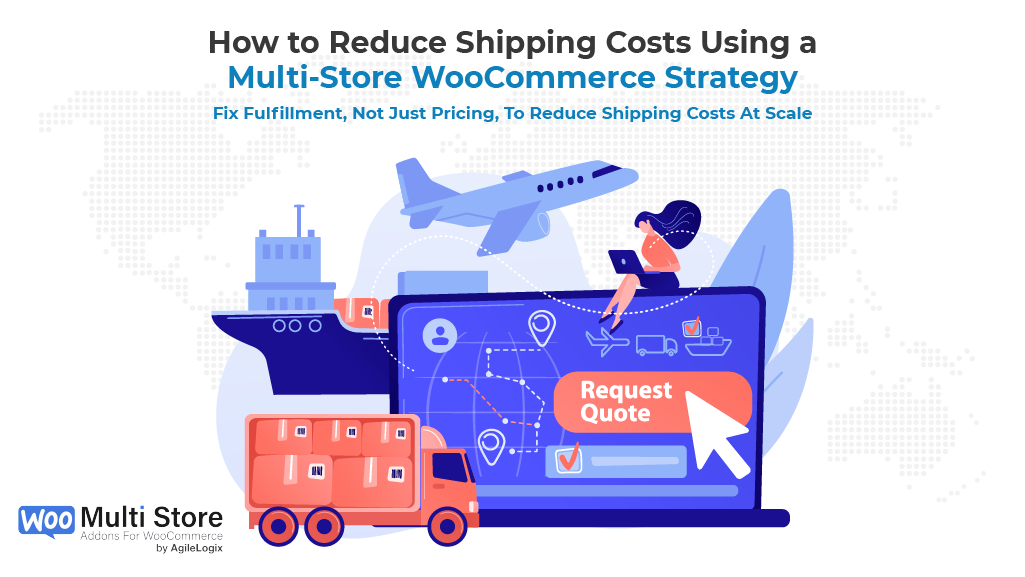
Shipping has become one of the biggest challenges for any e-commerce business today.
As order volume grows, so do the expenses, and many small business owners struggle to manage rising transportation expenses without affecting profit margins.
If you are trying to understand how to reduce shipping costs, you need to look beyond basic pricing tactics and focus on how your system actually works.
What Determines the Shipping Expenses
The transport fee is influenced by several factors, such as rate, distance, packaging overheads, and the type of shipping services you use. Many businesses try to reduce shipping costs by comparing rates or offering free shipping, but these methods often provide only short-term relief. They do not address the root cause of high shipping prices.
According to growing e-commerce demand and rising delivery expectations, Statistica, customer expectations for fast and affordable delivery continue to increase. This puts pressure on businesses to find smarter ways to manage shipping costs while still maintaining a good customer experience. For many small business operations, this creates a constant struggle between logistics and service quality.
Most guides focus on simple ways to reduce shipping costs, such as negotiating discounted shipping rates or using cheaper shipping options.
While these strategies can help you reduce expenses in the short term, they do not solve the bigger issue. To truly understand how to reduce shipping costs, you need to rethink your shipping strategy and look at how your fulfillment process is structured.
Businesses that rely on a single warehouse often face higher shipping charges because every shipment must travel longer distances. This increases operational fees and makes it harder to control shipping fees.
In contrast, businesses that use multiple fulfillment locations can reduce shipping distance and improve delivery speed at the same time.
If you want to reduce shipping costs effectively, you need to move from a pricing-focused approach to a system-focused approach. This means optimizing how products are stored, how orders are fulfilled, and how shipping routes are planned.
Businesses using WP Maps to manage store locations and product availability across regions can better optimize fulfillment and reduce shipping costs.
In the next section, we will look at the most common ways on how to reduce shipping costs and why they only work for a short period before their limitations start to show.
2. Quick Ways to Reduce Shipping Cost (And Why They Only Work Short-Term)
Before moving to system-level solutions, it is important to understand the common methods businesses use to lower transport fees.
These are usually the first steps taken when trying to solve how to reduce shipping costs, especially for a small business or a growing e-commerce business.
Most of these methods focus on pricing and carrier selection. They can help you save on transport fees in the short term, but they do not fix deeper fulfillment issues.
Common short-term tactics include:
- Compare shipping rates across carriers like USPS and other shipping companies
- Use flat-rate shipping or offer free shipping to improve conversions
- Negotiate discounted shipping rates based on shipping volume
- Use a shipping calculator to calculate shipping and find the best price
Many businesses begin with basic tactics to reduce WooCommerce shipping costs using common optimization techniques, but these methods often fail to scale as order volume increases.
These approaches help reduce shipping costs and improve business shipping performance. They are useful when managing small business shipping operations and trying to cut expenses quickly.
Typical impact of these methods:
| Method | Benefit | Limitation |
| Compare rates | Find cheaper shipping | Does not reduce distance |
| Free shipping | Improves sales | Increases hidden fees |
| Discounts | Lower shipping fees | Not scalable long-term |
| Shipping tools | Improve process | Does not fix fulfillment |
You can also explore how table rate shipping allows flexible pricing based on order conditions by reading this guide: The Ultimate Guide to WooCommerce Table Rate Shipping.
While these strategies help you on how to reduce shipping costs and improve shipping services, they only address surface-level problems. They do not change how shipments move through your system.
To truly understand how to reduce shipping costs, you need to look beyond pricing and focus on why these methods stop working as your business grows.
Understanding how shipping rates are calculated by major carriers like USPS helps businesses compare shipping options and find the best price.
In the next section, we will break down why these common methods fail over time and what most businesses overlook when trying to manage shipping expenses.
3. Why Most Shipping Expense Reduction Methods Fail Over Time
Now that you have seen the common tactics, it is important to understand why they stop working. Many businesses believe they have solved how to reduce shipping costs, but the problem returns as order volume grows.
As businesses expand to multiple locations, data migration frameworks are critical for managing multi-store inventory and logistics, ensuring accurate stock distribution and efficient fulfillment.
The main issue is that these methods focus on pricing, not structure. They help reduce expenses temporarily, but they do not change how shipments are handled. As your e-commerce business scales, shipping expenses increase again because the system remains the same.
Why these methods fail:
- Overheads are still driven by distance and shipping zones
- A single warehouse increases shipping distance for most orders
- Packaging and pricing do not change delivery routes
- Shipping fees rise with higher shipment volume
Even if you compare rates or negotiate discounts, you are still dealing with the same underlying system. This makes it harder to manage business transport fees over time.
Surface optimization vs real problem:
| Optimization Type | What It Fixes | What It Misses |
| Carrier comparison | Lower shipping rate | Distance remains unchanged |
| Free shipping | Better conversion | Higher hidden overheads |
| Shipping software | Faster process | No impact on fulfillment |
| Discounts | Lower shipping fees | Not scalable |
To understand how to reduce shipping costs effectively, you need to focus on how orders are fulfilled, not just how they are priced. This is where most businesses miss the real opportunity to lower expenses.
The factors that affect shipping expenses, such as distance, weight, and delivery speed, directly influence how much each shipment costs.
In the next section, we will look at the real reason transport expenses stay high and how fulfillment and inventory placement directly impact your shipping expenses.
4. How Multi Store Addons for WooCommerce Help Reduce Shipping Cost
This is the turning point. If you have tried every trick and still feel stuck, it is because the problem is not your pricing.
For growing WooCommerce stores, controlling fulfillment is often more important than negotiating lower shipping rates.
The real answer to how to reduce shipping costs is to fix how orders move through your system.
Many store owners spend months researching how to reduce shipping costs, only to discover that carrier discounts and pricing adjustments provide temporary results. The deeper issue is usually the fulfillment structure behind every order.
When every shipment leaves from a single location, you are forced to pay for distance again and again. It does not matter how many discounts you negotiate. The expense keeps coming back.
This is where most small business owners feel the pressure. Margins shrink. Customer expectations rise. And transport expenses become unpredictable. If you are serious about learning how to reduce shipping costs, you need a solution that addresses the source of those expenses rather than treating the symptoms.
Now imagine a different system:
- Orders are fulfilled from the closest location.
- Shipping distance drops.
- Delivery becomes faster.
- Overheads become easier to manage.
This approach helps WooCommerce merchants scale without allowing shipping expenses to erode profit margins.
This is not a trick. This is a structural shift.
For businesses looking at how to reduce shipping costs over the long term, reducing fulfillment distance is often far more effective than constantly searching for lower shipping rates.
The most successful WooCommerce businesses focus on fulfillment efficiency first and pricing optimization second.
This is exactly what Multi Store Addons for WooCommerce is built to do. It gives store owners a practical framework for how to reduce shipping costs by connecting inventory, fulfillment, and delivery decisions into one centralized system.lt to do.
Businesses that want a scalable solution often start with a WooCommerce multi-store plugin that allows centralized control over inventory, pricing, and fulfillment, making it easier to reduce shipping distance and improve delivery efficiency across multiple locations.
How to Reduce Shipping Costs using 7 Key Methods in Multi Store Addons for WooCommerce:
- Table rate shipping for flexible pricing rules
You can define pricing based on weight, cart value, or delivery conditions using table rate shipping. - Local pickup to eliminate shipping expenses entirely
Customers can choose nearby stores and avoid shipping fees using local pickup shipping. - Store-wise flat rate shipping for better expense control
Each store can define its own shipping pricing through store-wise flat rate shipping. - Central stock management for full control
Manage inventory and pricing from one dashboard across all locations. This reduces errors and helps reduce expenses through better planning. - Header store selector for smarter fulfillment
Customers select the closest store, and the storefront updates instantly with accurate stock and pricing using the header selector widget feature. - Store Manager Control
Allows individual store managers to manage inventory, orders, and operations for their assigned locations while maintaining centralized oversight. - Multi-Location Fulfillment
Automatically fulfills orders from the nearest store location, reducing shipping distance, lowering delivery expenses, and improving fulfillment speed.
Businesses that integrate POS systems benefit from real-time stock updates and seamless order handling across multiple store locations, reducing delays and shipping errors.
How this changes your transport system:
| Traditional Setup | Multi-Store Setup |
| One warehouse | Multiple fulfillment points |
| Long shipping distance | Shorter delivery routes |
| Higher shipping fees | Lower shipping fees |
| Slower delivery | Faster fulfillment |
This is the difference between reacting to logistic overheads and controlling them.
When you start thinking about how to reduce shipping costs in this way, everything changes. You stop chasing cheaper shipping rates and start building a system that naturally lowers overheads over time.
This is not just about saving money. It is about building a business that can grow without being limited by shipping expenses.
In the next section, we will compare single-store and multi-store setups in real scenarios to show how this shift impacts expenses and performance.
5. Multi-Store vs. Single Store: Expenses Comparison in Real Scenarios
Now that you have seen the solution, it is important to compare it with the traditional setup. This makes it easier to understand how to reduce shipping costs in a practical, real-world scenario.
In a single-store setup, every shipment is processed from one warehouse. This increases shipping distance and leads to higher logistic overheads for each order. In this case, business owners start to wonder how to reduce shipping costs.
Even if you compare shipping rates across carriers like USPS or try to get cheaper shipping, the overall expense of shipping remains high because the system does not change.
In a multi-store setup, orders are fulfilled from the nearest location. This reduces shipping distance and helps reduce shipping costs consistently. It is one of the most effective ways on how to solve how to reduce shipping costs at scale, especially for an e-commerce business handling multiple shipments daily.
Key differences in shipping performance:
- Single warehouse increases shipping zones and last-mile shipping fees
- Multi-location fulfillment reduces shipping routes and delivery time
- Centralized systems help reduce operational costs and improve accuracy
Expenses comparison overview:
| Setup Type | Shipping Expenses Impact | Delivery Efficiency |
| Single Store | Higher shipping fees | Slower delivery |
| Multi-Store | Lower shipping fees | Faster delivery |
This comparison shows that fulfillment structure plays a bigger role than pricing tactics. Businesses that shift to multi-store systems not only reduce shipping costs but also improve customer experience.
For small business owners, this becomes even more important. As order volume grows, business shipping fees increase rapidly if the system is not optimized. A multi-store setup helps manage shipping expenses, improve shipping process efficiency, and create a more scalable shipping strategy.
If you are serious about solving how to reduce shipping costs, you need to focus on reducing shipping distance instead of only chasing lower rates.
In the next section, we will look at real-world examples of how businesses use these strategies to reduce logistic overheads and improve transport performance.
6. Real-World Ways Businesses Reduce Shipping Costs Using Multi-Store Systems
Now that the comparison is clear, let’s look at how businesses actually apply these ideas. Seeing real examples helps you understand how to reduce shipping costs in a way that feels achievable, not theoretical.
Retailers with multiple outlets often fulfill each shipment from the nearest store. This reduces shipping distance and lowers logistic overheads without relying on constant discounts. It is one of the most reliable ways to reduce shipping costs while improving delivery speed.
Many e-commerce businesses also combine local pickup with delivery. This hybrid approach allows them to save on logistic overheads and reduce operational pressure during peak periods.
Common real-world strategies:
- Use multiple store locations to reduce shipping zones and delivery distance
- Offer local pickup to eliminate shipping fees for nearby customers
- Optimize packaging expenses to reduce dimensional weight charges
- Use shipping software to streamline your shipping process and reduce human error
For example, businesses that implement local pickup in WooCommerce to reduce delivery distance and offer flexible fulfillment options can significantly lower transport expenses.
Impact of these strategies:
| Strategy | Result |
| Local fulfillment | Lower shipping fees |
| Distributed inventory | Faster delivery |
| Optimized packaging | Reduced shipping charges |
These examples show that businesses that focus on structure rather than pricing consistently reduce shipping costs and improve business shipping performance.
To truly master how to reduce shipping costs, you need to adopt systems that reduce shipping distance and improve efficiency at every step.
Efficient operations depend on store managers handling multi-store inventory, pricing, and order control from a centralized system, ensuring better coordination across locations.
In the final section, we will bring everything together and explain the smartest way to reduce shipping costs for long-term growth.
Conclusion: The Smart Way to Reduce Shipping Cost in WooCommerce
At this point, the answer to how to reduce shipping costs should feel clear. It is not about chasing discounts or constantly comparing shipping rates across carriers. It is about building a system that naturally lowers expenses as your business grows.
Most small business owners start by trying to reduce shipping costs using short-term methods.
These include negotiating shipping discounts, offering free shipping, or switching between shipping companies. While these approaches can help reduce costs temporarily, they do not fix the underlying issue.
The real solution is to rethink how your shipping process works.
Key takeaways to reduce costs effectively:
- Focus on reducing shipping distance instead of only lowering shipping fees
- Use distributed fulfillment to improve delivery speed and efficiency
- Optimize packaging costs and reduce dimensional weight charges
- Use shipping tools and data to manage costs and improve accuracy
Businesses that adopt the right strategies are able to reduce shipping costs for small operations while also scaling efficiently. They move from reactive decision-making to proactive planning.
A system built on multiple fulfillment points helps reduce operational costs, improve shipping routes, and create a more reliable shipping strategy. This is the foundation for reducing transportation costs in distribution networks and maintaining consistent performance over time.
To fully solve how to reduce shipping costs, you need to combine smart pricing with smarter fulfillment. This is where solutions like multi-store WooCommerce systems help you reduce expenses, improve efficiency, and deliver better customer experiences.
In the end, the goal is simple. Build a system where shipping expenses decrease as your business grows, instead of becoming a barrier to scaling.
FAQs
1: What Is the Best Way to Reduce Shipping Costs in WooCommerce?
Many store owners searching for how to reduce shipping costs focus on carrier discounts and promotional shipping offers. While these tactics can help, the most effective solution is reducing fulfillment distance through multi-location inventory and local fulfillment strategies.
2: How Can Multi-Store Fulfillment Help Reduce Shipping Costs?
A multi-store fulfillment model allows orders to be shipped from the nearest location instead of a central warehouse. This reduces shipping distance, lowers delivery expenses, and provides a practical answer to how to reduce shipping costs for growing WooCommerce businesses.
3: Does Local Pickup Reduce Shipping Costs?
Yes. Local pickup is one of the most effective ways to reduce shipping expenses because it eliminates delivery charges entirely. Businesses looking for ways on how to reduce shipping costs often overlook local pickup, even though it can significantly improve profit margins and customer satisfaction.
4: Why Do Shipping Costs Increase as a Business Grows?
As order volume grows, businesses often ship products to a wider geographic area. This increases shipping zones, delivery distance, and overall fulfillment expenses. Understanding these factors is essential when evaluating how to reduce shipping costs at scale.
5: Is a Multi-Store WooCommerce Setup Better Than a Single Warehouse?
In many cases, yes. A multi-store WooCommerce setup can reduce delivery distance, improve fulfillment speed, and lower operational expenses. For businesses researching how to reduce shipping costs, distributed fulfillment is often more effective than relying solely on discounted carrier rates.
6: What Features Help Reduce Shipping Costs in WooCommerce?
Features such as local pickup, table rate shipping, store-wise shipping rules, centralized inventory management, and store selection tools can all help lower fulfillment expenses. These features work together to solve how to reduce shipping costs by improving the efficiency of the entire fulfillment process.